
Hiring today can feel a bit like placing a bet in a market that keeps shifting under your feet.
You find a strong candidate. You move quickly. You make the offer.
And then…
- They’re not the right long-term fit
- The role evolves faster than expected
- Or your business priorities shift entirely
For CEOs, CFOs, and HR leaders, the real challenge isn’t just filling roles—it’s reducing hiring risk while still moving the business forward.
“The talent that’s actively applying is often not at the right level. It’s either someone who’s too junior… or someone who’s overqualified and may see the role as a short-term stop,” says Lucy Griffith, Senior Recruiter at Morgan Hunter.
That mismatch makes hiring decisions even more complex—and increases the risk of getting it wrong.
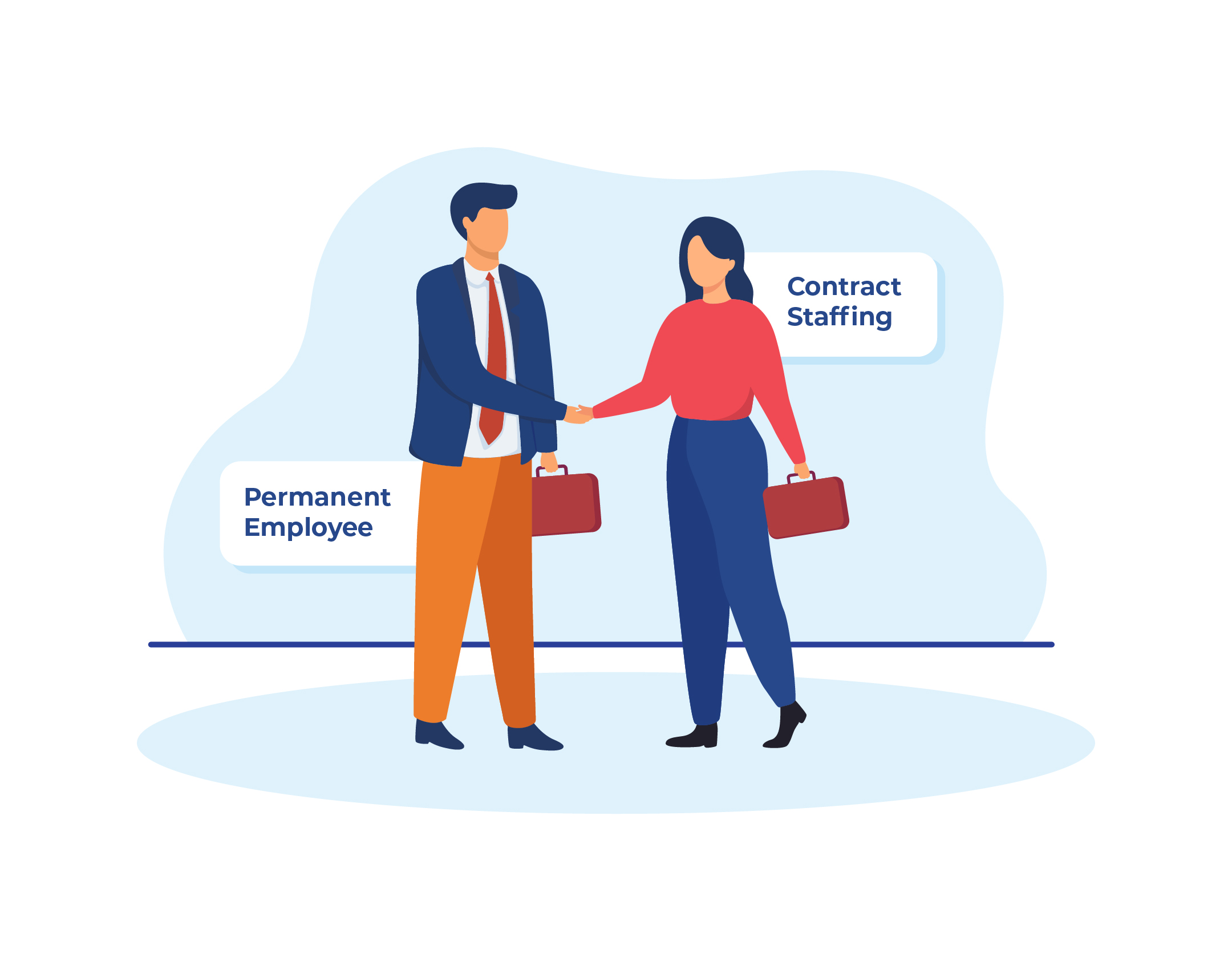
That’s where the decision between contract staffing and direct hire staffing becomes more than just a tactical choice. It becomes a strategic lever.
Let’s break down how each approach works, when to use them, and how to build a smarter, more flexible hiring strategy.
The Core Difference: Flexibility vs. Commitment
Griffith continues on to talk about the market and how it is impacting the hiring process in Kansas City: “Last year, because there was so much uncertainty, a lot of companies leaned heavily on contract staffing to get people in immediately without committing to full-time headcount. Now we’re seeing a shift—roles that were put on hold are opening back up, and companies are ready to move forward with permanent hires again.”
At a high level, the distinction is simple:
- Contract staffing provides short-term, flexible talent for specific needs
- Direct hire staffing focuses on permanent employees who become long-term members of your team
But the implications go much deeper—especially when it comes to cost, speed, and risk.
Think of contract staffing as agility.
Think of direct hire staffing as investment.
The question isn’t which one is better. It’s which one is right for the moment your business is in.
When Contract Staffing Makes Strategic Sense
Contract staffing is often misunderstood as a “temporary fix.” In reality, it’s one of the most effective ways to reduce hiring risk—especially in uncertain or fast-moving environments.
1. When the Role Isn’t Fully Defined
If you’re still figuring out what success looks like in a role, committing to a full-time hire can be risky.
Lucy remarks,”sometimes companies don’t even have the title or structure fully figured out… contract roles help them test what’s actually needed before committing.”
Contract staffing allows you to:
- Test the scope of the role
- Adjust responsibilities in real time
- Learn what skills are truly needed
- Adding a mid-level role
- Stacking up your talent
It’s a way to gather real-world data before making a long-term investment.
2. When Speed Matters
Open roles cost money.
Whether it’s lost productivity, delayed projects, or team burnout, the longer a position stays vacant, the more expensive it becomes.
Contract staffing helps you:
- Fill gaps quickly
- Maintain momentum
- Avoid overloading your existing team
- Move quickly for long-term needs while still evaluating for a long-term fit
And let’s face it, If you lose a payroll person, you need a payroll person… tomorrow.
In many cases, contract professionals can step in faster than a traditional hiring process allows—especially in high-impact roles.
3. When Demand Is Variable
Not every role needs to exist forever.
Seasonal spikes, project-based work, and periods of growth often require additional hands—but not permanent headcount.
Contract staffing gives you the ability to scale up and down without long-term financial commitments.
For CFOs especially, this creates a more flexible cost structure—aligning labor spend more closely with business demand.
4. When You Want to “Try Before You Buy”

One of the most valuable aspects of contract staffing is the ability to evaluate talent in real time.
You’re not relying solely on interviews and references. You’re seeing how someone actually performs within your organization.
If it’s a strong fit, you can often transition that individual into a permanent role.
For Lucy, some of the true benefits are that “It allows companies to move quickly for urgent needs while still evaluating for a long-term fit.”
If not, you’ve avoided the cost and disruption of a mis-hire.
When Direct Hire Staffing Is the Right Move
While contract staffing offers flexibility, direct hire staffing plays a critical role in building stability and long-term growth.
1. When the Role Is Core to Your Business
If a position is central to your operations, culture, or leadership structure, a permanent hire is typically the right choice.
These are roles where:
- Institutional knowledge matters
- Long-term relationships are critical
- Strategic continuity is essential
In these cases, direct hire staffing is an investment in the future of your organization.
2. When You Need Long-Term Ownership
Some roles require more than execution—they require accountability over time.
Permanent employees are more likely to:
- Take ownership of outcomes
- Invest in team dynamics
- Contribute to company culture
If you’re building something that needs staying power, direct hire staffing provides that foundation.
3. When the Market Is Competitive
In competitive talent markets, top candidates are often looking for stability, benefits, and long-term growth opportunities.
Direct hire staffing allows you to:
- Attract high-caliber candidates
- Position your company as an employer of choice
- Secure talent before competitors do
The Real Cost of a Bad Hire

No matter which path you choose, one thing is clear:
A bad hire is expensive.
And not just in salary.
It impacts:
- Team morale
- Productivity
- Leadership bandwidth
- Client relationships
Some estimates suggest that a bad hire can cost anywhere from 30% to 200% of the employee’s annual salary when you factor in lost time, rehiring, and disruption.
For Lucy, one of her goals in working with organizations is to help them get them secure the right person, not just for skills but for culture and long-term fit. But that same care and attention is not always applied across the process at all organizations. What happens then? “Sometimes companies move too quickly just to get a body in the seat—and that’s when they end up refilling the role a few months later.”
That’s why reducing hiring risk isn’t just an HR priority—it’s a business priority.
A Smarter Approach: Blending Both Models
Lucy is certainly aware of market factors and trends that impact hiring. “While we’re seeing more movement back toward direct hires, contract staffing is still a critical tool depending on the situation.”
The most effective organizations don’t choose between contract staffing and direct hire staffing.
They use both—intentionally.
“Sometimes companies use contract roles as a way to test and learn. They might not even have the role fully defined yet—they’re figuring out where this person should sit, who they report to, and what success really looks like before committing long term,” Griffith says.
Here’s what that can look like:
- Contract staffing for speed and flexibility
- Direct hire staffing for stability and growth
For example:
- Use contract staffing to support a new initiative or fill an urgent gap
- Evaluate what the role truly requires
- Transition to a direct hire once the need is clearly defined
This hybrid approach allows you to stay agile while still building a strong, committed team over time.
Questions to Ask Before You Hire
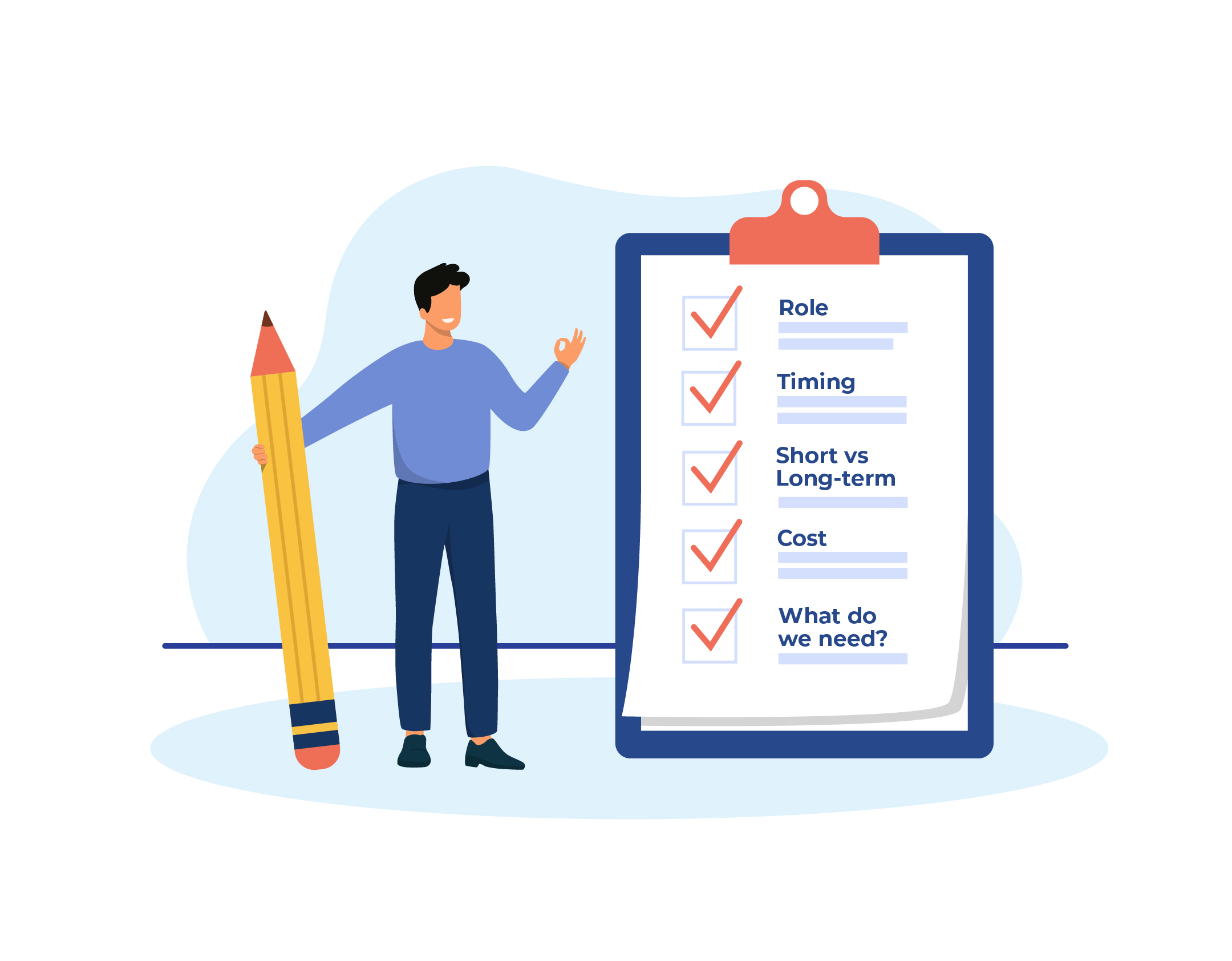
Before deciding on contract vs. permanent, it helps to step back and ask a few key questions:
- Is this role clearly defined, or still evolving?
- How quickly do we need someone in place?
- Is this a long-term need or a short-term demand?
- What is the cost of getting this hire wrong?
- Do we need flexibility, or stability—or both?
These questions help shift the conversation from “how do we fill this role?” to “how do we make the smartest hiring decision?”
Reducing Risk Starts with the Right Partner
Navigating these decisions internally can be challenging—especially when you’re balancing speed, cost, and quality.
If you want the best of all possible outcomes, “have the right people involved in the interview process from the start—and make sure the process is smooth and intentional,” Griffith advises.
Griffith gets to work with real organizations navigating hiring every day, and share a recent story:
“We recently worked with a company heading into their busy season when their recruiter went on leave without a clear return timeline. They needed someone immediately to support weekly hiring events, but couldn’t justify a permanent hire. We placed a contract recruiter quickly—and ultimately, that person turned into a full-time hire because it was such a strong fit.”
The right partner can make all the difference. At Morgan Hunter, we help organizations think beyond individual hires and build workforce strategies that align with their business goals.
Whether you need contract staffing to stay agile or direct hire staffing to build long-term strength, we work with you to reduce risk, improve outcomes, and find the right talent for the moment you’re in.
Final Thought
Hiring will never be completely risk-free.
But it can be smarter.
By understanding when to leverage contract staffing and when to invest in direct hire staffing, you give your organization something powerful:
The ability to adapt without losing momentum.
And in today’s environment, that’s not just an advantage. It’s a necessity.